Case Study
A theory-driven observational study exploring how users research and plan ski holidays online. Applying Information Foraging Theory and Error & Resilience frameworks to six naturalistic observations produced nine evidence-based design principles and guidelines for travel planning websites.
Background
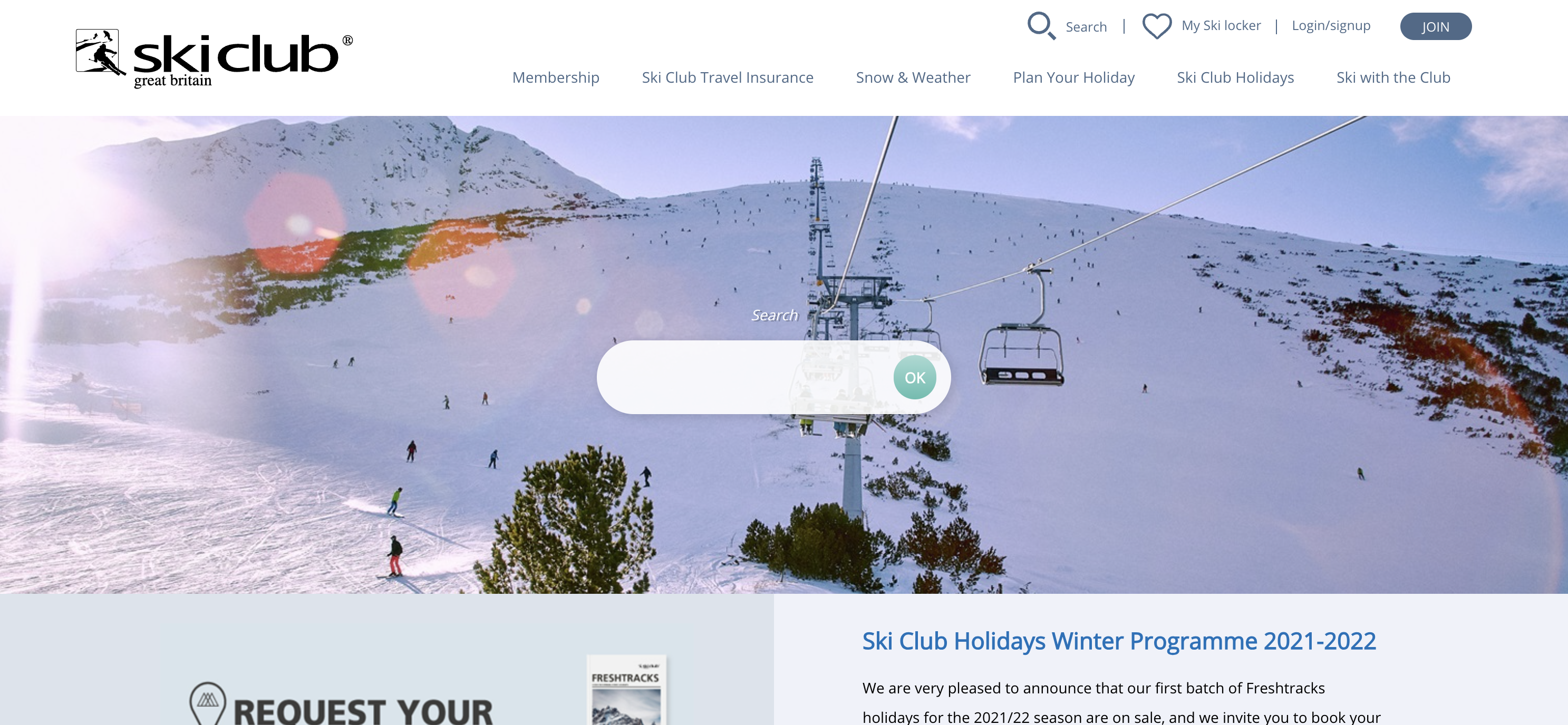
This study investigated how users interact with travel websites when planning a ski holiday — a task that demands navigating vast amounts of information across destinations, accommodation, flights, ski passes, and travel logistics. The Ski Club of Great Britain (SCGB) website served as the mandatory starting point for participants' initial research, after which they were free to use whatever sites they would normally turn to.
A parallel observation tracked participants planning multi-country trips during COVID uncertainty, requiring them to research visas, vaccine requirements, flights, and accommodation across several countries. Together, the two observation types were designed to generate rich qualitative data for two complementary theoretical frameworks: Information Foraging Theory and Error & Resilience.
All observations were conducted remotely due to COVID restrictions on in-person research, which directly influenced the choice of theoretical frameworks — both operate “in the mind” rather than “in the world”, making them well suited to screen-and-audio-based remote observation.
Theoretical Frameworks
The choice of frameworks was deliberate and shaped by the constraints of the research context. With in-person observation off the table, I needed theories grounded in cognitive processes observable through screen recordings and think-aloud protocols, rather than frameworks that require physical environmental context.
Information Foraging Theory (IFT) was selected for the first observation type because multi-country trip planning is inherently an information-seeking task across a rich, distributed environment. IFT, as defined by Pirolli (1999), explains how people adapt their strategies for seeking, gathering, and consuming information based on environmental cues. The multi-country trip scenario was specifically designed to maximise foraging behaviours — participants had to seek out visa requirements, vaccine rules, flights, and accommodation across multiple countries, producing a wealth of data around diet selection, information scent, and patch enrichment.
Error & Resilience was not the original plan for the second observation. I initially intended to use a CASSM (Concept-based Analysis of Surface and Structural Mismatch) approach for the ski trip observation. However, during piloting it became clear that the SCGB website was genuinely challenging for most participants to use — the pilot participant struggled significantly, and the data being generated was far richer in error instances and coping strategies than in concept mismatches. I made the decision to pivot to Error & Resilience, which proved to be the right call: the data captured clear instances of slips, lapses, and rule-based mistakes alongside the resilience strategies participants used to recover or work around problems.
For error classification I used Massaiu’s (2005) definitions — distinguishing between slips (execution failures), lapses (memory failures), and mistakes (planning failures) — and took Reason’s (2000) systems-focused approach, which emphasises building defences against errors rather than blaming individuals. For resilience coding, I applied Day’s (2015) six strategies: checking before acting, monitoring results, anticipating problems, appropriating resources, maintaining resource availability, and reinterpreting to recover. This systems lens complemented IFT and allowed both frameworks to be applied across both observation types, substantially increasing the quality and volume of data available for thematic analysis.
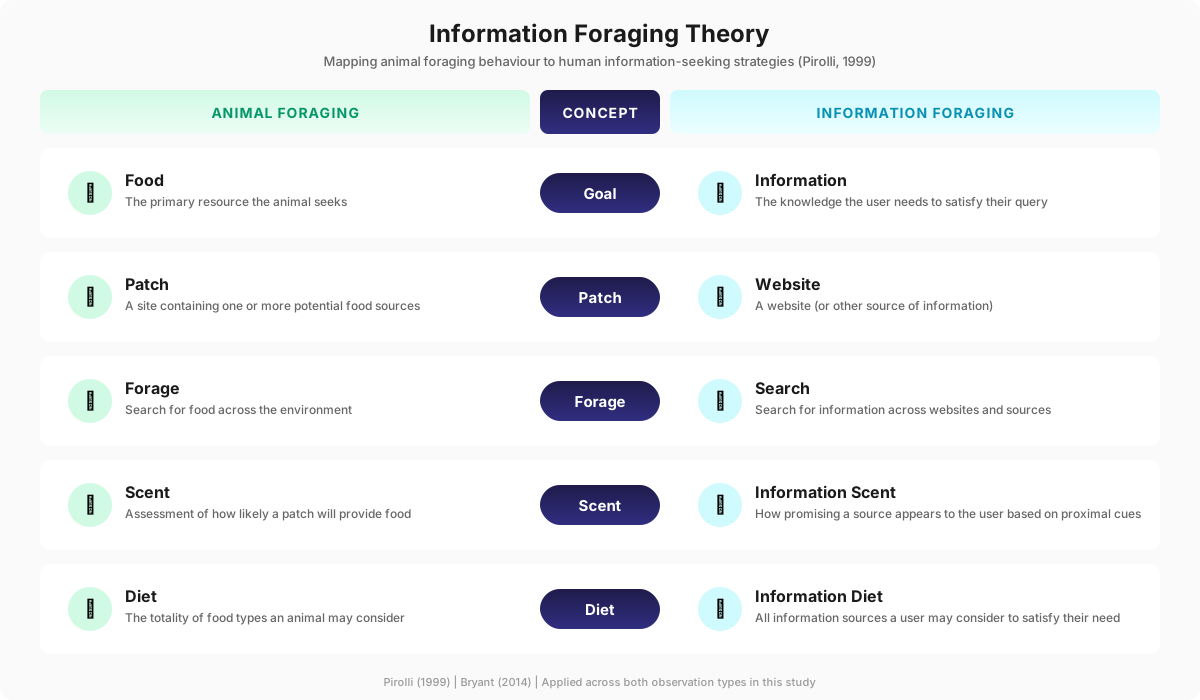
Information Foraging Theory maps animal foraging behaviour to how users seek, evaluate, and consume information online — the foundational lens for analysing participants’ search strategies across both observation types.
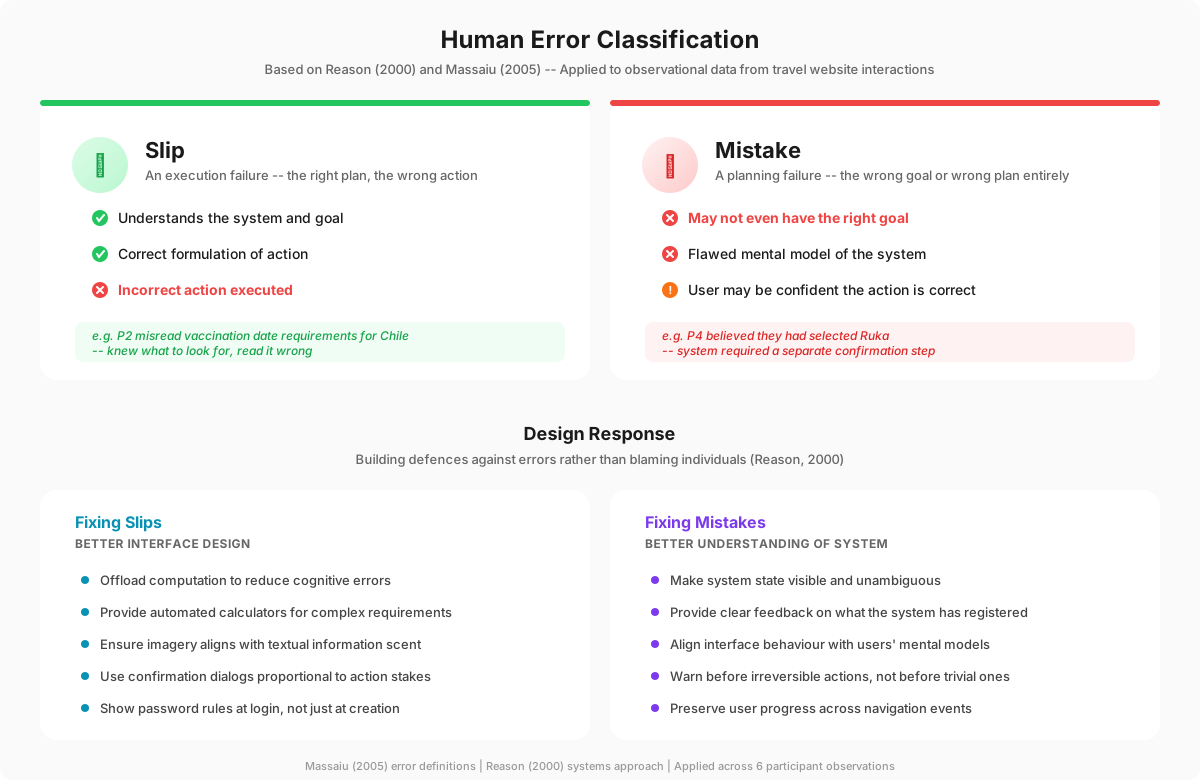
Coding slips and mistakes was key to producing the design guidelines below. Classifying each error instance using Massaiu’s (2005) definitions — distinguishing between execution failures (slips) and planning failures (mistakes) — revealed distinct patterns that demanded different design responses, from better interface affordances to clearer system feedback.
Methodology
I recruited six participants who would naturally plan the types of trips the observations required, ensuring their actions were as authentic as possible. Two pilot studies were conducted beforehand to validate the match between observation goals and theoretical approaches — it was the pilot for observation two that revealed the need to switch from CASSM to Error & Resilience.
As the theoretical frameworks were “in the mind”, I only needed audio and screen recordings for analysis — no efficiency metrics were required. I asked participants to conduct a concurrent think-aloud, allowing me to investigate situations where what I observed didn’t match my expectations (Goodman et al., 2012). Where needed, I used concurrent probing to gain explanations and clarifications, making a conscious effort to stay unobtrusive.
Retrospective probing was considered but ultimately rejected for two key reasons. First, for IFT: information consumes the attention of its recipients (Pirolli, 1999), and there was a real risk of participants failing to verbalise their reasoning in information-rich environments. Without understanding why they took specific actions, I couldn’t determine the value of information to each individual. Second, for Error & Resilience: workarounds are harder to discover retrospectively because “with the immediate need met, participants may have forgotten that the problem ever existed” (Goodman et al., 2012). Concurrent probing was therefore essential for both frameworks.
Analysis
Although the original plan paired IFT with observation one and Error & Resilience with observation two, strong results for both frameworks emerged across both observation types. I therefore applied all frameworks to all observations, maximising the quality of data feeding into the thematic analysis.
I followed Rosala’s (2019) six-step thematic analysis process to avoid the common pitfalls of superficial analysis or simply regurgitating what participants said. The process began with transcription using Otter AI, followed by full immersion — reading every transcript while watching the screen recordings (Clarke, 2015). I then created framework-specific codes based on Bryant’s (2014) IFT foraging strategies, Day’s (2015) six resilience strategies, and Massaiu’s (2005) error definitions.
These codes were applied interpretively while re-watching recordings a second time, colour-coding instances in the transcripts and writing up initial guidelines. I then grouped similar instances to uncover running themes across participants, which served as a fact-check on the initial coding and ensured accurate, well-grounded findings.
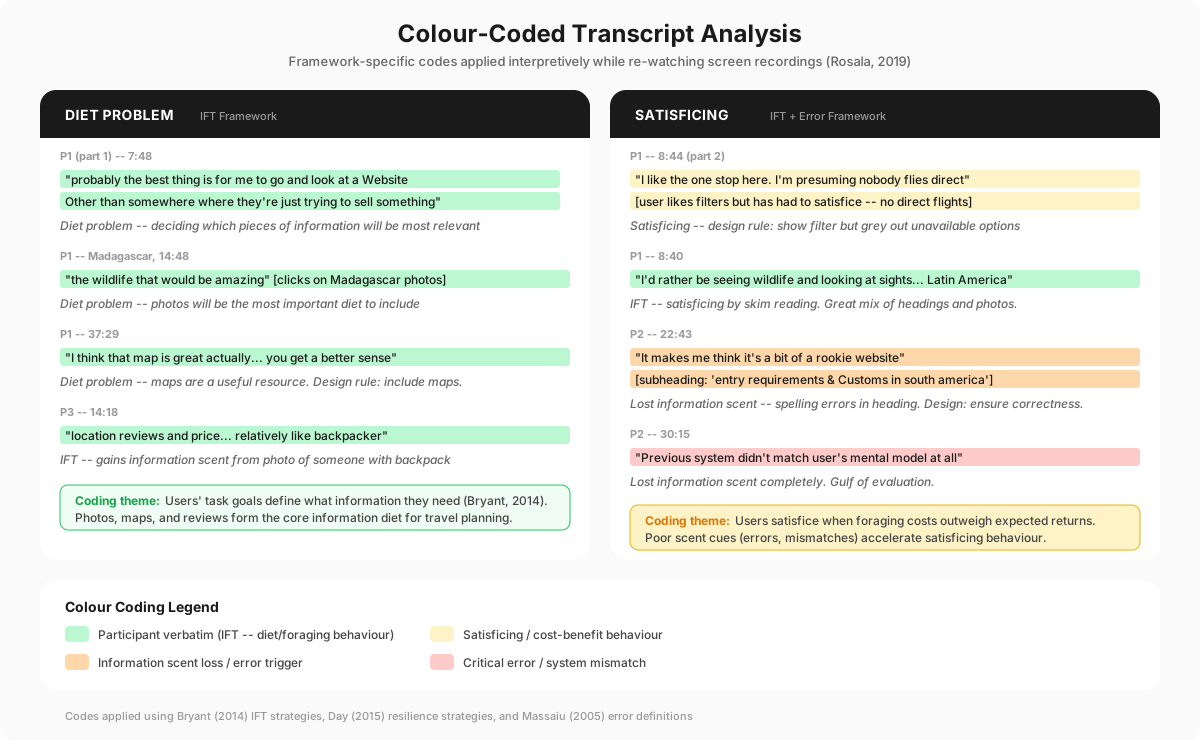
Framework-specific codes were applied interpretively while re-watching screen recordings, with colour-coded highlights distinguishing between foraging behaviours, satisficing patterns, scent loss, and critical errors across all six participants.
Key Findings
One of the strongest themes was participants’ instinctive turn to maps as a foraging strategy. Five out of six participants immediately gravitated toward maps when present. As P1 noted: “that map is great actually… it enables you to put things into context.” IFT’s concept of diet selection explains this — participants’ task goals defined what information they needed (Bryant, 2014), and maps offered a high-value, low-cognitive-cost way of consuming travel information. Resilience analysis reinforced the finding: P1 used a traffic-light map to check COVID restrictions before booking flights (checking before acting), while P2 kept a map of South America open throughout their session to offload working memory (appropriating a resource). However, P5’s experience showed the limits — they lost information scent on an Airbnb map because, without landmarks, they “didn’t really know Courchevel very well.”
Information scent — the imperfect perception of value gained from proximal cues (Pirolli, 1999) — proved central to nearly every participant interaction. Every participant avoided links labelled “Ad” on search results, with P1 explaining: “I know that people are paying deliberately to put them up there in front of me.” Conversely, five out of six participants gravitated toward official government and organisation websites, trusting their information scent. P1 stated they “should have the latest advice and it should be updated”, while P2 went “straight onto the gov website because it’s reliable and easy.” Imagery was another powerful scent cue: P3 chose a hostel because its photo showed “a group of people with backpacks on”, matching their desire for a backpacker-friendly atmosphere.
The error analysis produced some of the study’s most striking findings. P2 misread dense text about Chile’s COVID entry requirements, believing they could only enter six months after their last vaccination — when the rule was the opposite. This slip was never noticed and would have resulted in them being barred from the country. P4 experienced a compounding series of errors on a flight booking site: they selected Ruka as their destination via a checkbox but the interface required a separate confirmation step. They never confirmed, unknowingly searched all destinations, and ended up booking a holiday to Austria instead of Finland. P4 also lost all their package holiday selections when pressing the back button, with no warning that navigation would clear their choices.
“I don’t want to end four or five steps away from a page that I haven’t finished reading.”— Participant 3, explaining why they opened links in new tabs to reduce between-patch foraging costs
“I’m going to go back to the accommodation page to check something — if all that is got rid of I’ll be fuming.”— Participant 4, moments before losing all their package holiday selections by pressing the back button
Outcomes
The thematic analysis produced nine design principles and guidelines grounded in participant behaviour and supported by both theoretical frameworks. As the error classification graphic above illustrates, coding slips and mistakes was key to producing the guidelines below — each error type demanded a distinct design response, from interface improvements to prevent execution failures through to clearer system models that address planning failures at their root. Each guideline addresses a recurring pattern observed across multiple participants.
Guideline 1 — IFT & Resilience
Maps were central to five participants’ diet selection and helped transform complex textual information into spatial context that was simple to understand. P2 frequently used maps to check before taking an action (Day, 2015).
Guideline 2 — Resilience
P3 triangulated their accommodation location using landmarks on Hostelworld. P5 found the Airbnb map unusable without reference points because they hadn’t visited Courchevel before. Landmarks enable users to appropriate map resources effectively.
Guideline 3 — IFT
P2 repeatedly followed incorrect information scent when searching for entry requirements. Providing small previews of linked pages gives users more cues to evaluate before committing to a click, improving foraging performance (Bryant, 2014).
Guideline 4 — IFT
Five out of six participants gravitated to official websites for reliable information. Grouping these in a dedicated section enhances foraging performance by improving scent cues and adding structure to patchy environments.
Guideline 5 — IFT
P3 quickly chose a hostel where the photo matched the description. When all available cues align, information scent strengthens and users make faster, more confident decisions.
Guideline 6 — Error
P2 made a critical slip misreading Chile’s vaccination entry date. By providing automated calculators for complex date-based requirements, systems can prevent the kind of slip that humans are prone to with dense textual information.
Guideline 7 — Error & Resilience
P4 was forced to “confirm” a destination search (low stakes) but received no warning when pressing back deleted all their selections (high stakes). A common-sense approach to when confirmation appears will reduce rule-based mistakes.
Principle 8 — Error
P3 repeatedly failed to remember their EasyJet password because the rules set at creation were hidden at login. Displaying these rules — and offering user-defined hints — offloads memory and reduces lapses.
Guideline 9 — IFT & Resilience
P3 had to leave the booking flow to check how far Paris Orly was from the city centre. Providing this context within the interface speeds up decision-making and removes the need for users to check before acting.
Reflection
Error & Resilience and Information Foraging Theory revealed themselves to be natural bedfellows through their shared understanding of human strategy. According to Pirolli, we would expect IFT strategies to evolve and improve returns on foraging over time — and many of these strategies were simultaneously understood through the resilience framework. In total, participants used 34 resilience strategies across the observations, with many occurring concurrently with foraging behaviours. After conducting this research, I would argue that the act of enriching an information patch itself deserves recognition as a resilience strategy, since users re-evaluate their actions and alter their approach to forage successfully.
The shared lens was particularly valuable for triangulating system failures. Where IFT explained why a user’s information-seeking strategy broke down, Error & Resilience explained how they attempted to recover — or failed to. The error analysis produced some of the most actionable guidelines precisely because it was supported by IFT’s explanation of why users were put in error-prone situations by poor information architecture in the first place.
Had in-person observation been possible, I would have chosen a framework that lived “in the wild” to capture social and environmental context. The remote constraint shaped the study but didn’t diminish it — these cognitive frameworks gave meaning to participants’ behaviour and identified improvements to future websites with well-grounded principles and guidelines. Due to the small sample size, reliability at scale can’t be assured, but the principles are ready for implementation and iteration after further testing.